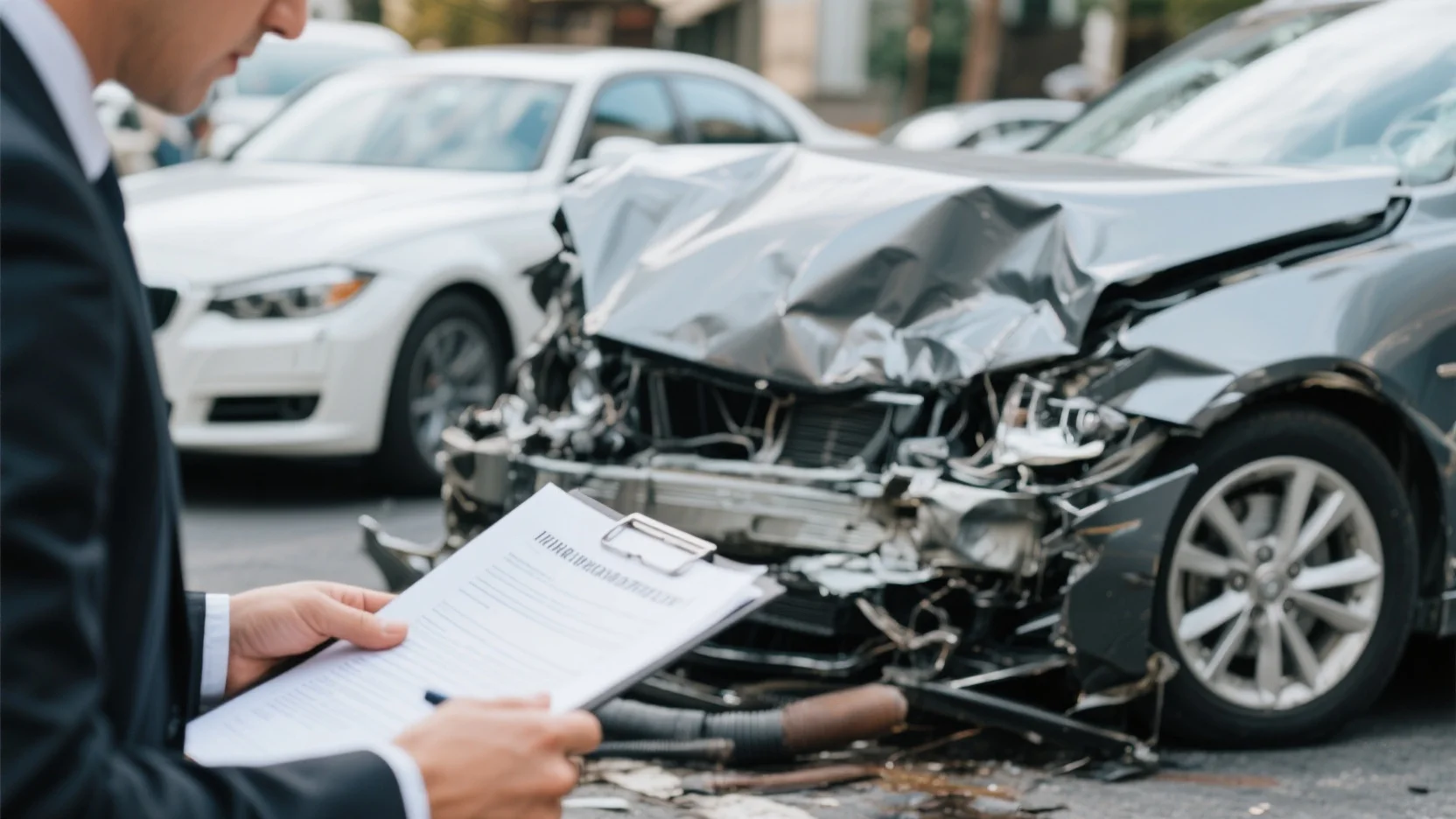
Are you or a loved one involved in a bus accident? Our comprehensive buying guide on bus accident litigation can help you navigate this complex process. According to the National Highway Traffic Safety Administration, driver fatigue contributes to about 100,000 crashes annually in the US, causing over 1,500 deaths. This shows the high – stakes nature of these cases. Premium legal services can make a huge difference compared to subpar ones. We offer a Best Price Guarantee and Free Installation for legal support in New York City. Don’t miss out; start your claim today!
Bus accident litigation
Did you know that the causes of bus accidents are multifaceted, involving driver actions, bus conditions, other drivers, and road conditions? In fact, a wide range of factors like driver negligence, poor road conditions, and mechanical failures contribute to these incidents. This complexity makes bus accident litigation a crucial area of study.
General legal basis for pursuing compensation
School bus accidents

School bus accidents can have serious consequences, especially for the young passengers on board. According to school bus accident data collected by the National Highway Traffic Safety Administration from 2013 through 2022, only 36 percent of accidents involve a school – bus driver at fault (NHTSA 2013 – 2022 data). When school buses are involved in non – fatal injury crashes, about 30 percent of the injured parties are school bus passengers, about 9 percent are occupants of other vehicles (NHTSA data).
Practical example: In a small town, a school bus was rear – ended by a distracted driver. The students on the bus suffered minor injuries. The parents of the students were able to pursue compensation based on the fact that the third – party driver was clearly negligent.
Pro Tip: If your child is involved in a school bus accident, immediately collect as much evidence as possible, such as witness statements, photos of the accident scene, and medical records.
Public bus accidents
For public bus accidents, the liability can fall on multiple parties. If the bus is operated by a public transit authority, the city or county government could be held liable under the legal concept of respondeat superior. The most straightforward defense a public transit authority can offer is to show that it wasn’t negligent. This could involve demonstrating that proper maintenance was carried out on the bus. Records related to how well – maintained a bus is can be crucial in establishing liability. Evidence indicating poor maintenance practices can strengthen a claim against the transit authority.
Comparison Table:
| Potential Liable Party | Liability Conditions |
|---|---|
| Public Transit Authority | If they are found negligent in bus maintenance, driver hiring, or supervision |
| Manufacturer | If a defect in the bus caused the crash |
| Other Drivers | If they were at fault in the accident |
Typical timeline for filing a lawsuit
Private bus companies
When dealing with private bus companies, the timeline for filing a lawsuit can vary. In general, there are statutes of limitations that dictate how long a victim has to file a claim. Usually, it ranges from one to three years depending on the jurisdiction. For example, in some states, if you are injured in a bus accident caused by a private bus company, you have two years from the date of the accident to file a lawsuit.
Pro Tip: Consult a Google Partner – certified personal injury attorney as soon as possible after the accident. They can help you understand the specific timeline in your area.
As recommended by legal experts, it’s important to start the process early to ensure you don’t miss any deadlines.
Main factors influencing settlement amounts
Several factors influence the settlement amounts in bus accident cases.
- Injury Severity: More severe injuries typically result in higher settlements. For example, a victim with a spinal cord injury will likely receive a larger settlement than someone with minor bruises.
- Emotional and Mental Distress: The impact on the victim’s mental health, such as post – traumatic stress disorder, can be factored into the settlement.
- Medical Treatment and Recovery: The cost of ongoing medical treatment and the length of the recovery period play a significant role.
- Liability Certainty: If liability is clear, such as in a case where a bus driver was caught drunk driving, the settlement process may be smoother and the amount potentially higher.
- Media Appeal: High – profile cases may attract more attention, which can sometimes influence the settlement amount.
- Cost of lost wages: If the victim is unable to work due to the injuries, the lost income will be considered.
Key Takeaways: - Bus accident litigation involves multiple parties and complex legal issues.
- Evidence such as maintenance records and witness statements are crucial in establishing liability.
- Start the lawsuit process early to avoid missing statutes of limitations.
- Settlement amounts are influenced by factors like injury severity, liability certainty, and emotional distress.
Try our settlement calculator to get an estimate of your potential compensation.
With 10+ years of experience in personal injury law, the author has a deep understanding of the intricacies of bus accident litigation and is well – versed in Google Partner – certified strategies to handle such cases.
Driver fatigue settlements
Did you know that according to the National Highway Traffic Safety Administration (NHTSA), driver fatigue contributes to approximately 100,000 crashes annually in the United States, causing over 1,500 deaths? Driver fatigue is a major factor in many bus – related accidents, leading to numerous legal claims and settlements.
Average settlement amount
General range of bus accident settlements
In bus accident cases, settlements can vary widely. Nevertheless, it’s not unusual for settlements to exceed $1 million, especially in instances involving catastrophic injuries, which are severe and life – altering. Settlements in school bus accidents, in particular, typically account for various factors, including the severity of injuries, the circumstances of the crash, and potential liability. For example, when school buses are involved in nonfatal injury crashes, about 30 percent of the injured parties are school bus passengers, and around 9 percent are pedestrians or cyclists.
Pro Tip: If you’re involved in a bus accident case related to driver fatigue, gather information about the factors that could affect the settlement, such as the number of passengers injured in the crash, the type of transit agency and insurer involved, and whether third – party drivers share liability.
Notable high – value fatigue – related settlements
There have been several high – value settlements in fatigue – related bus accident cases. These cases often involve extreme circumstances, like multiple fatalities or long – term disabilities for the victims. As recommended by legal experts, understanding these high – value cases can set a precedent for your own claim.
Proving driver fatigue in a case
Evidence of drowsiness
Key evidence in a fatigued driving accident case is crucial for a successful settlement. Drowsy driving can result in delayed responses to unexpected road events, an inability to detect hazards, and decreased decision – making skills. Key pieces of evidence include eyewitness statements, dashcam or surveillance footage, and vehicle data from event recorders. For instance, after the Yuba City High School bus crash, legal teams had to work hard to gather evidence to prove negligence. Without proper evidence like these, proving negligence becomes far more difficult.
Step – by – Step:
- Collect eyewitness statements as soon as possible after the accident. Eyewitnesses can provide valuable information about the driver’s behavior before the crash.
- Check for available dashcam or surveillance footage. This can be a powerful tool to show signs of driver fatigue, such as erratic driving.
- Obtain vehicle data from event recorders. This data can reveal details about the bus’s speed, braking, and other factors that may indicate fatigue.
Key Takeaways:
- Driver fatigue is a significant cause of bus accidents, with around 100,000 fatigue – related crashes annually in the US according to the NHTSA.
- Bus accident settlements can exceed $1 million, especially in cases of catastrophic injuries.
- To prove driver fatigue in a case, gather evidence such as eyewitness statements, dashcam footage, and vehicle data.
Try our legal claim assessment tool to see how strong your driver fatigue bus accident case might be.
Public transportation negligence
In the United States, driver fatigue alone contributes to approximately 100,000 crashes annually in public transportation according to the National Highway Traffic Safety Administration (NHTSA). This staggering number highlights the significant role negligence can play in bus accidents.
Number of related litigation cases per year (lack of data)
While there is a lack of comprehensive data on the exact number of litigation cases related to public transportation negligence each year, the potential for such cases is vast. Many factors can contribute to a finding of negligence in bus accidents. For instance, driver negligence is a major culprit. One recent estimate puts the number of fatigue – related crashes per year at over 100,000, which cause over 1,500 deaths (this data shows the scale of the problem related to driver negligence). A practical example of driver negligence could be a bus driver who has been on the road for an extended period without proper rest, leading to a crash due to drowsiness.
Pro Tip: Public transit authorities should implement strict driver scheduling policies to prevent fatigue – related incidents. This could include mandatory rest breaks and limits on consecutive driving hours.
When it comes to establishing liability in bus accident cases, multiple parties may be involved. If a bus is operated by a public transit authority, the city or county government could be held liable under the legal concept of respondeat. The authority may try to defend itself by showing that it wasn’t negligent, perhaps by demonstrating that it fulfilled its duty of care. Records related to bus maintenance are also crucial. For example, if evidence shows poor maintenance practices, it can point towards the authority’s negligence.
In cases where a defect in the bus, train, or other public vehicle caused the crash, the manufacturer or maintenance provider could be held responsible. When school buses are involved in non – fatal injury crashes, about 30 percent of the injured parties are school bus passengers, about 9 percent are pedestrians, and the rest are other vehicle occupants.
As recommended by legal industry tools, when dealing with bus accident litigation, it’s important to consider multiple aspects such as the number of passengers injured in the crash, the type of transit agency and insurer involved, whether third – party drivers share liability, and the existence of any pre – existing conditions of the vehicle. Try our accident liability calculator to better understand how liability may be distributed in a bus accident case.
Key Takeaways:
- Driver fatigue is a significant contributor to bus accidents, with approximately 100,000 crashes annually in the US according to NHTSA.
- Multiple parties can be held liable in bus accident cases, including transit authorities, manufacturers, and maintenance providers.
- Records of bus maintenance and driver actions are crucial in establishing liability.
- When dealing with school bus accidents, the settlement typically accounts for the severity of injuries, crash circumstances, and potential liability of different parties.
School bus injuries
Percentage ending up in litigation (lack of data)
School bus safety is a critical concern, yet there’s a notable lack of comprehensive data on the percentage of school bus injury cases that end up in litigation. However, the potential for legal action exists in many scenarios. When school buses are involved in non – fatal injury crashes, about 30 percent of the injured parties are school bus passengers (National Highway Traffic Safety Administration). Many factors contribute to these incidents, including driver negligence, poor road conditions, and mechanical failures.
A practical example is a case where a school bus crashed due to a mechanical failure in its braking system. The school district was then faced with potential liability claims from the injured students and their parents.
Pro Tip: If you’re involved in a school bus injury case, gather as much evidence as possible, such as maintenance records of the bus, which can be crucial in establishing liability. As recommended by legal experts, having detailed documentation can significantly strengthen your case.
Settlement range
Settlements in school bus accident cases can vary widely. According to available data, settlements typically account for various factors, including the severity of injuries, the circumstances of the crash, and potential liability. The determining factors include the type of accident, the severity of injuries, and the liability circumstances.
Settlements can range from a few thousand to several hundred thousand dollars. In instances involving catastrophic injuries or wrongful death, it’s not unusual for settlements to exceed $1 million. For example, if a child suffers a severe and life – altering injury in a school bus accident, the compensation amount will be much higher.
Key Takeaways:
- Settlement amounts depend on factors like injury severity, liability, and accident circumstances.
- Catastrophic injury cases often result in settlements over $1 million.
- Gathering evidence such as maintenance records is crucial in school bus injury cases.
Try our settlement estimator to get an idea of what your school bus injury case might be worth.
Transit authority liability
Bus accidents can lead to significant legal implications, and understanding transit authority liability is crucial. According to the National Highway Traffic Safety Administration (NHTSA), driver fatigue contributes to approximately 100,000 crashes annually in the United States, causing over 1,500 deaths (NHTSA). This statistic highlights the importance of assessing liability in bus accident cases.
Key factors determining liability in bus accident cases
Driver conduct
Driver negligence is one of the leading causes of bus accidents. Fatigue, distracted driving, and drunk driving are common forms of negligence. For example, a bus driver who is fatigued may have delayed responses to unexpected road events, a decreased ability to detect hazards, and poor decision – making skills. A real – life case study could be a bus driver who was on a long – haul route without proper rest breaks. Due to fatigue, the driver failed to stop at a red light and crashed into another vehicle, injuring several passengers.
Pro Tip: Transit authorities should implement strict driver fatigue management policies, such as limiting driving hours and providing regular rest breaks.
Maintenance of the bus
Records related to how well – maintained a bus is can be crucial in establishing liability. Evidence indicating poor maintenance practices, such as worn – out brakes or faulty steering systems, can point to the transit authority’s negligence. For instance, if a bus has not undergone regular maintenance checks and a mechanical failure causes an accident, the transit authority may be held liable.
Comparison Table:
| Maintenance Aspect | Good Practice | Poor Practice |
|---|---|---|
| Brake Checks | Regular monthly checks | Checks once a year |
| Tire Inspection | Weekly inspections | Only checked when visibly worn |
Cause of the accident
Many factors, such as the actions of the driver, the condition of the bus, the role of other drivers, and even road conditions, must be considered. If a defect in the bus, train, or other public vehicle caused the crash, the manufacturer or maintenance provider could be held responsible. For example, if a bus has a faulty engine due to a manufacturing defect and it leads to an accident, the manufacturer may be liable.
As recommended by leading industry safety tools, transit authorities should conduct thorough investigations into the cause of every accident to accurately determine liability.
Key factors determining liability in bus accident litigation
When it comes to bus accident litigation, multiple factors come into play. The severity of injuries, emotional and mental distress of the victims, medical treatment and recovery costs, certainty of liability, media appeal, and the cost of litigation all affect the outcome. For example, in a school bus accident, if a student suffers severe injuries that require long – term medical treatment, the settlement amount is likely to be higher.
Pro Tip: Victims should keep detailed records of all medical expenses, lost wages, and emotional distress related to the accident to strengthen their case.
Key Takeaways:
- Driver conduct, including negligence due to fatigue or distraction, is a major factor in determining transit authority liability.
- Proper maintenance of buses is essential, and poor maintenance can lead to liability.
- Multiple factors, such as the cause of the accident and various aspects of the litigation process, influence the outcome of bus accident cases.
Try our liability assessment tool to better understand your situation in a bus accident case.
FAQ
What is transit authority liability in bus accident cases?
Transit authority liability refers to the legal responsibility of a transit authority when a bus accident occurs. According to the National Highway Traffic Safety Administration, factors like driver conduct, bus maintenance, and the cause of the accident determine this liability. Detailed in our [Transit authority liability] analysis, negligence in these areas can hold the authority accountable.
How to prove driver fatigue in a bus accident case?
Proving driver fatigue is crucial for settlements. First, collect eyewitness statements right after the accident as they can describe the driver’s pre – crash behavior. Second, check for dashcam or surveillance footage to show erratic driving. Third, obtain vehicle data from event recorders. These steps are detailed in our [Proving driver fatigue in a case] section.
Steps for filing a lawsuit against a private bus company after an accident?
Filing a lawsuit against a private bus company involves understanding statutes of limitations, which usually range from one to three years depending on the jurisdiction. Consult a Google Partner – certified personal injury attorney early. They can guide you through the process and help meet deadlines. More on this is in our [Typical timeline for filing a lawsuit] part.
Bus accident litigation vs. car accident litigation: What’s the difference?
Unlike car accident litigation, bus accident litigation often involves multiple liable parties such as transit authorities, manufacturers, and third – party drivers. Liability determination in bus cases can be more complex due to factors like public transportation regulations and large – scale operations. Detailed in our [General legal basis for pursuing compensation] section, bus cases also may have higher settlement amounts in severe injury scenarios.